Partial Discharge Monitoring for Critical Electrical Assets
Detect insulation deterioration before it becomes failure, downtime or emergency repair.
ACTENIQ provides engineering-led partial discharge monitoring, testing and diagnostics for HV switchgear, cables, transformers and critical electrical infrastructure.
We help organisations detect PD activity, understand the level of risk and take practical action through monitoring, expert interpretation, remediation planning and ongoing asset support.
When Partial Discharge goes undetected, asset failure becomes a bigger risk
Partial discharge is an early warning sign of insulation deterioration in medium and high-voltage assets. It can occur in switchgear, cables, transformers and other critical electrical infrastructure.
Left undetected, PD activity can escalate from minor insulation degradation to flashover, equipment damage, unplanned outage, safety exposure and costly emergency repair.
Early warning of insulation failure
PD activity can indicate insulation deterioration before full asset failure occurs.
Hidden between inspections
Periodic spot checks only provide a snapshot and may miss intermittent PD activity.
Risk to uptime
and safety
Unmanaged PD can increase the risk of failure, fire, outage, equipment damage and personnel exposure.
Better evidence for action
Monitoring helps teams understand severity, trends and the right next step before issues escalate.
Spot Check Monitoring
or Continuous Online Monitoring?
Handheld PD Monitoring
A snapshot of asset behaviour over a defined monitoring period.
Traditionally used for
- Investigating suspected PD issues
- Risk assessment during maintenance planning
- Confirming discharge activity before action
- Short-term diagnostic studies
Limitations
- Only captures conditions at the moment of testing
- PD activity can be intermittent & easily missed
- No visibility between visits
- Requires engineers to access live HV zones
Useful for initial assessments, but won't detect emerging faults between visits.
Continuous PD Monitoring
Temporary or permanent systems to provide ongoing visibility 24/7.
Key benefits
- 24-hour discharge detection - catch faults as they develop
- Trend analysis over time reveals gradual degradation
- Correlate PD activity with load and environmental conditions
- Early identification of emerging faults before failure
- No need to regularly enter live switchgear rooms
Enables
- Condition-based maintenance instead of fixed schedules
- Remote monitoring by ACTENiQ experts
- Planned mitigation - not emergency response
Provides a deeper, ongoing understanding of asset behaviour and real risk.
From Suspected Partial Discharge to Practical Action
ACTENIQ can support partial discharge monitoring across HV switchgear, cables, transformers and critical electrical assets using a combination of TEV, ultrasonic, HFCT, acoustic and online monitoring technologies.
Depending on the site and asset type, monitoring can include external sensors, permanent online systems, portable diagnostic kits, remote alarming, BMS/SCADA integration, cloud-based monitoring and expert interpretation.
For detailed system architecture, sensor options and product specifications, download our technical brochure.
Assess
Monitor
Diagnose
Recommend
Install & Support
Why sites use our Partial Discharge monitoring
Without monitoring, PD activity can remain invisible until failure occurs. Our solutions help teams detect insulation deterioration early, understand the level of risk and take practical action before faults escalate.
Rapid Deployment
Deploy PD monitoring quickly, with installation options available with or without a planned outage. Systems can be provided as a permanent integrated solution or a temporary diagnostic setup for faster short-term visibility.

Secure Cloud or On-Premise Monitoring
Connect securely to ACTENIQ’s cloud platform or retain PD monitoring data on-premise within your own BMS, SCADA or retain data locally where site security requirements demand it.
Flexible
Installation
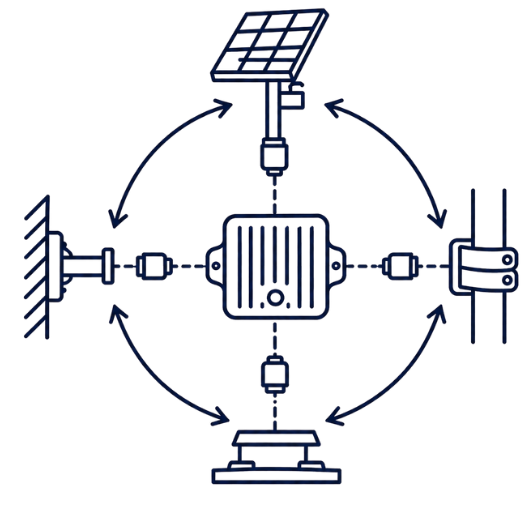
Designed to work across different HV asset types, manufacturers and site configurations, while integrating with supporting data sources such as power, climate and specialist sensor technologies.

Expert Support & Training
Choose the support model that fits your team, from expert 24/7 monitoring and analysis to hands-on training for self-managed systems, or a hybrid approach tailored to how your team operates.
Why sites use our Partial Discharge monitoring
Without monitoring, PD activity can remain invisible until failure occurs. Our solutions help teams detect insulation deterioration early, understand the level of risk and take practical action before faults escalate.
Rapid Deployment
Deploy PD monitoring quickly, with installation options available with or without a planned outage. Systems can be provided as a permanent integrated solution or a temporary diagnostic setup for faster short-term visibility.
Secure Cloud or On-Premise Monitoring
Connect securely to ACTENIQ’s cloud platform or retain PD monitoring data on-premise within your own BMS, SCADA or retain data locally where site security requirements demand it.
Flexible
Installation
Designed to work across different HV asset types, manufacturers and site configurations, while integrating with supporting data sources such as power, climate and specialist sensor technologies.
Expert Support & Training
Choose the support model that fits your team, from expert 24/7 monitoring and analysis to hands-on training for self-managed systems, or a hybrid approach tailored to how your team operates.
What's included in our
PD monitoring system?
Our Partial Discharge Monitoring system combines partial discharge sensors, aggregation hardware, smart alarming and local or cloud connectivity to support online PD monitoring across HV assets.
A modular sensor aggregation unit with three-channel input, built-in noise reduction, smart alarming, local configuration, Modbus output and scalable daisy-chain deployment.
- Best For: Aggregating sensor data and managing alarms across PD monitoring installations.
- Inputs: Three sensor channels
- Outputs: Local alarm, Modbus, cloud or connected system output.
- Key benefits: Built-in noise reduction, smart alarming, scalable deployment with daisy chaining units power & data, and remote threshold tuning.
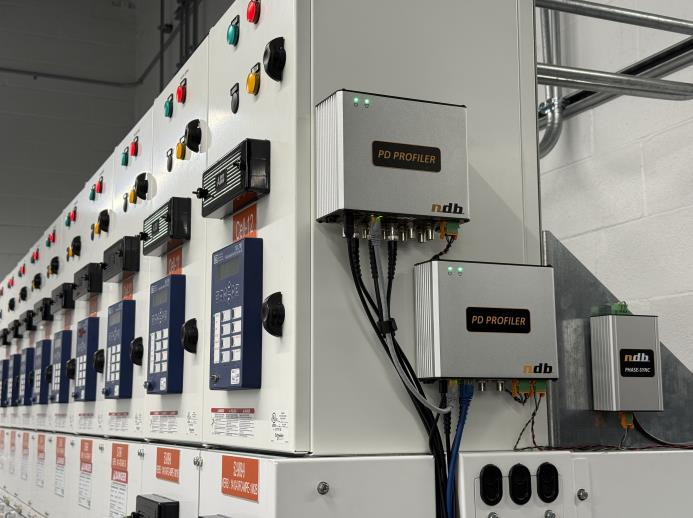
The PD Profiler™ is a cutting-edge Partial Discharge Monitor designed to boost reliability and safety of electrical systems. With its flexibility, the PD Profiler™ enables electrical maintenance professionals to conduct on-site partial discharge surveys or seamlessly integrate the device into permanent monitoring systems for comprehensive grid coverage.
- Best For: On-site partial discharge surveys, permanent monitoring systems and larger HV networks requiring multi-channel PD visibility.
- Detection Capability: Supports 8 to 20 PD channels with PRPD diagnostics, helping teams identify, trend and interpret partial discharge activity across multiple assets or measurement points.
- Installation Options: Can be used as a standalone monitoring device or integrated into onsite monitoring systems, with scalable daisy-chain deployment and no shutdown required for installation.
- Key Benefits: Provides easy-to-understand trend analysis, advanced interference management, onboard memory for several months of recordings and flexible deployment for both survey work and long-term grid coverage.
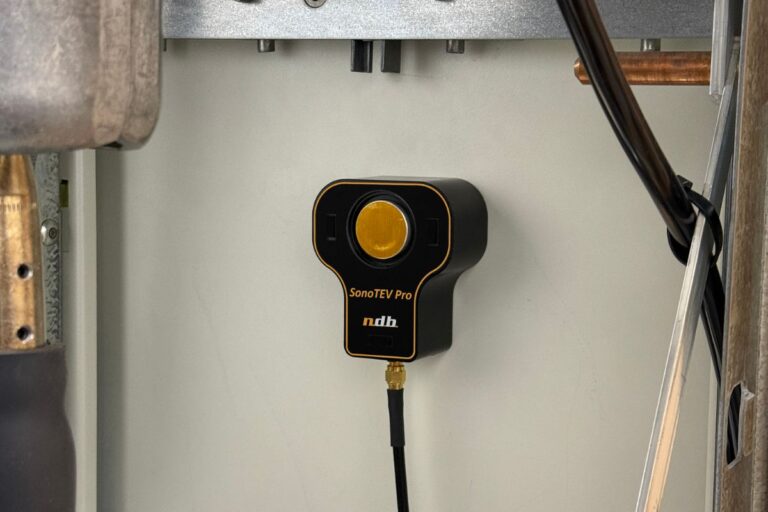
Next generation sensor capability and the primary sensing device on the PDProfiler system. Using combination of TEV and US sensing. This one model supports internal and external installation and can be changed over its lifetime with minimal effort.
- Best For: HV & Cabinet PD detection
- Detection methods: US, TEV/Acoustic
- Installation options: Perfect for Installation live, can be housed internally during shutdown window using same sensor. Advanced combination sensor reduces impact and re-engineering.
- Key benefits: PD Diagnostics, Non-Intrusive detection, Flexible placement, Higher powered sensor.
High Frequency Current Transformers, HFCT-20HD & HFCT-60HD™, are used as a secondary PD measurement point and are designed for partial discharge detection on assets main earth bonding
- Best For: Cable earths, busbars, GIS grounding conductors and secondary PD measurement.
- Detection methods: High-frequency current detection.
- Available Sizes: 20mm and 60mm apertures.
- Key benefits: Split-core design, noise shielding, rugged housing, weatherproof IP66 and liquid-resistant design.
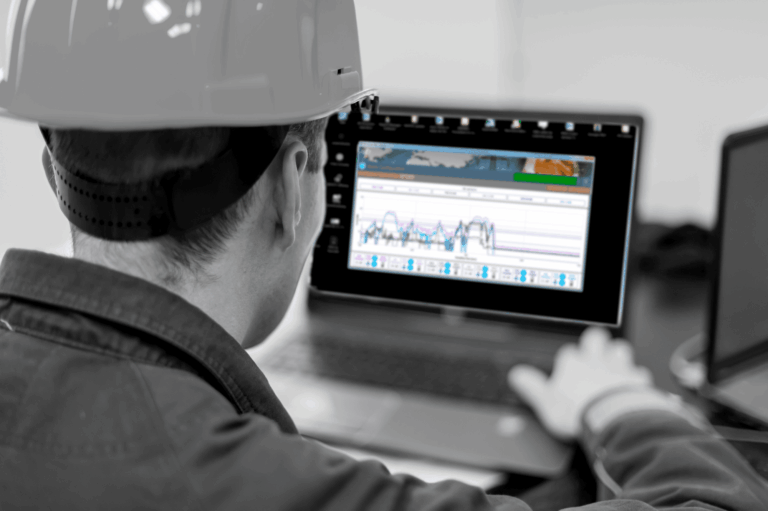
Monitoring Platform, allowing remote access and alarm management from PD Annunciator™ modules.
- Best For: Remote monitoring & alarm management, expert analysis, SCADA/BMS integration or local alarming.
- Connectivity Options: Cloud or monitor locally via Modbus data connection, connect with SCADA//BMS/PM, cloud platform and condition-based maintenance integration.
- Key Benefits: Supports safe remote visibility, alert management, trend analysis, expert monitoring and removes the need for routine PD handheld measurements that put operatives in potentially dangerous environments
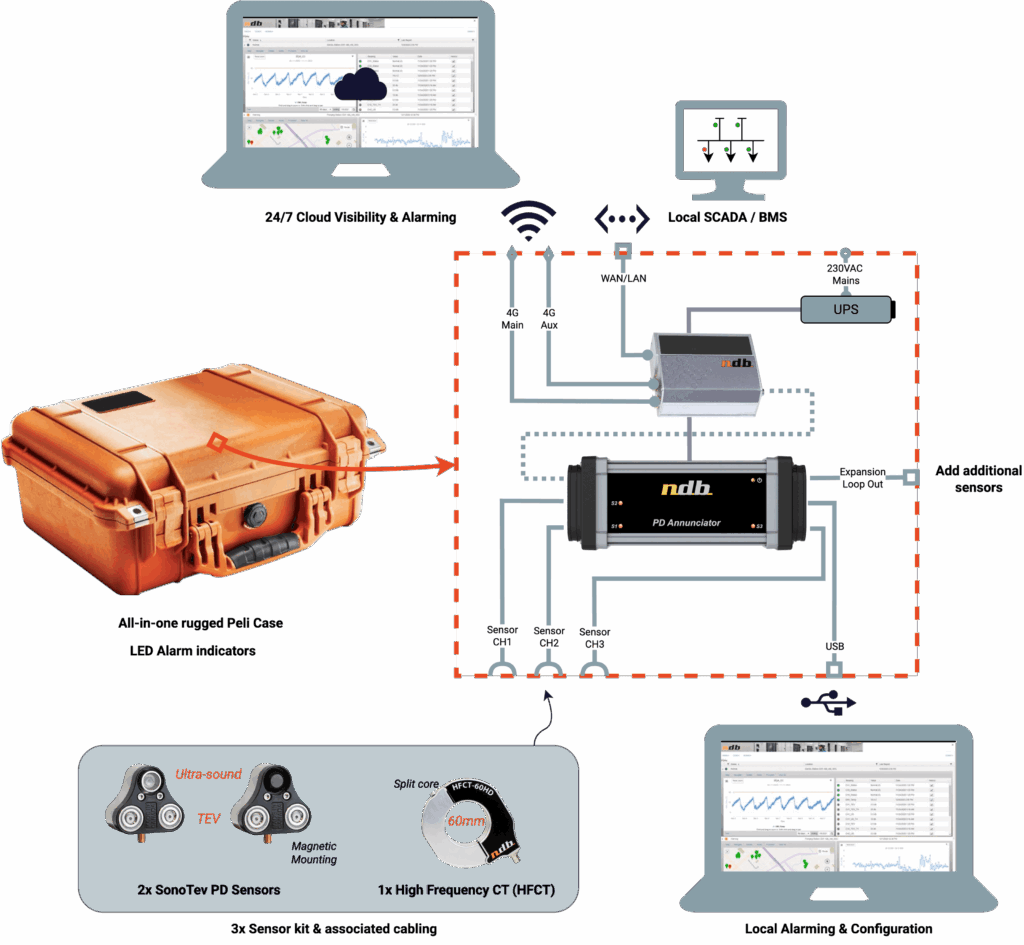
Hire a Portable Online PD Monitoring Kit
Continuous PD visibility without a permanent installation.
ACTENIQ can deploy a portable online PD monitoring system on a monthly hire basis, giving teams a quicker, lower-disruption way to monitor suspected PD risk without installing a permanent fixed solution.
This is ideal for urgent concerns, short-term risk assessment, planned shutdown decisions or assets that need to be monitored safely from a distance.
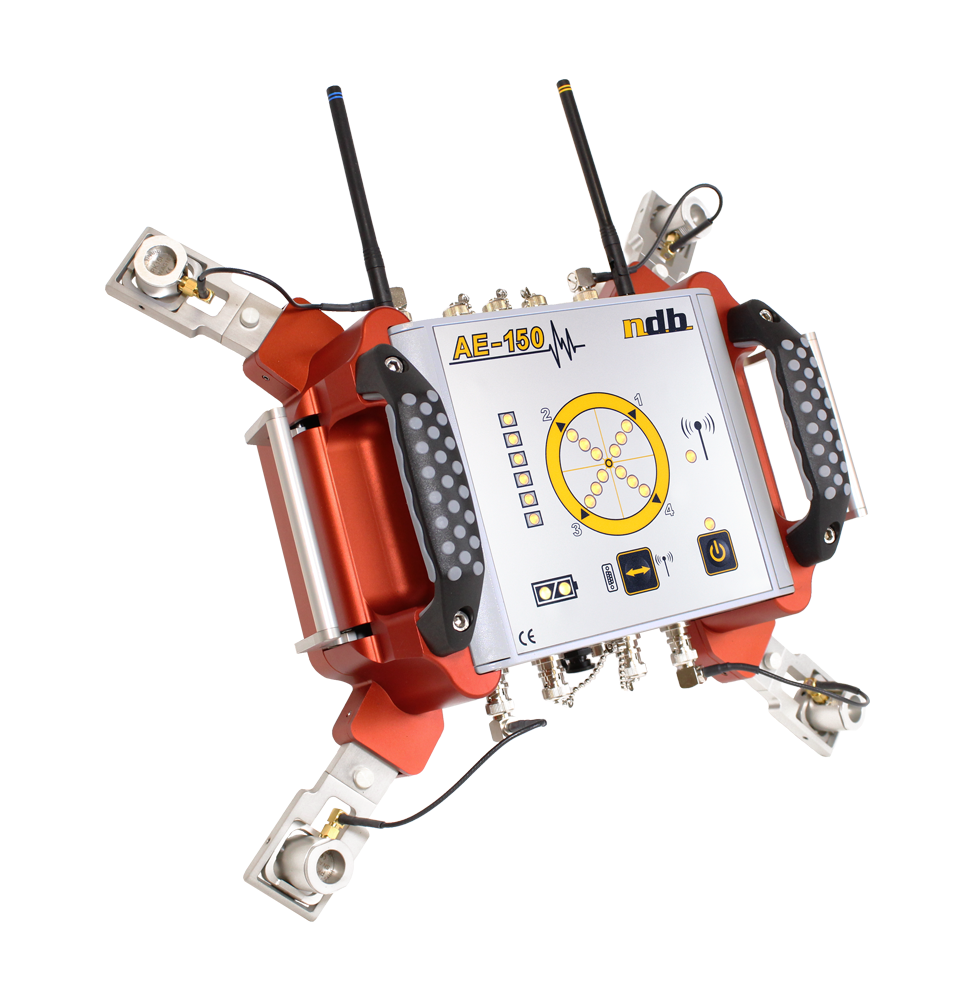
Partial discharge detection for power transformers
For transformer applications, ACTENIQ can support partial discharge detection and localisation using acoustic and electrical sensor data such as the AE-150™.
This helps teams identify potential discharge activity, understand likely fault location and make better decisions around inspection, maintenance or remediation.
Detailed transformer PD detection methods, sensor options and technical architecture are available in our technical brochure.
Frequently Asked Questions
What causes partial discharge in HV equipment?
Partial discharge (PD) occurs when small electrical discharges develop within or across insulation systems without creating a complete electrical breakdown. It is typically caused by insulation defects, contamination, moisture ingress, ageing materials, poor workmanship, voids within insulation or excessive electrical stress.
Whilst PD may begin at very low levels, it can progressively deteriorate insulation over time, increasing the likelihood of an unplanned equipment failure if left unmanaged.
What is a dangerous level of partial discharge?
There is no single discharge level that can be considered dangerous across every asset. The significance of partial discharge depends on the asset type, insulation system, discharge characteristics, environmental conditions and how the activity changes over time.
Rather than focusing on one measurement, experienced engineers assess the overall discharge behaviour, trends and supporting environmental data to determine the condition of the asset and the appropriate course of action.
What assets can partial discharge monitoring be used on?
Partial discharge monitoring can be applied to most medium and high voltage assets, including switchgear, cable systems, transformers, ring main units, terminations, joints and other insulation systems where electrical deterioration may occur.
Both temporary and permanently installed monitoring solutions are available depending on the level of risk, operational requirements and maintenance strategy.
Can partial discharge be repaired?
Partial discharge itself is a symptom rather than the fault. The underlying cause may be contamination, insulation deterioration, loose connections, poor installation or component defects.
Once the source has been identified, corrective actions can range from cleaning and minor repairs through to insulation refurbishment or equipment replacement. Detecting PD early significantly increases the opportunity to plan maintenance before a failure occurs.
Do you hire out temporary portable partial discharge monitoring systems?
Yes. ACTENIQ provides temporary online partial discharge monitoring systems on a flexible monthly hire basis, allowing organisations to quickly understand asset condition without committing to a permanent installation.
Unlike a handheld survey, which only captures PD activity at a single point in time, temporary online monitoring continuously records discharge activity over days, weeks or months. This makes it much easier to identify intermittent faults, understand developing trends, correlate discharge activity with environmental conditions and receive alerts if asset condition deteriorates.
Temporary monitoring is ideal for investigating suspected faults, assessing high-risk assets, supporting maintenance decisions, validating repairs or providing reassurance whilst permanent remediation plans are developed.
Is online partial discharge monitoring better than a spot check?
Both approaches have their place.
A handheld partial discharge survey provides an excellent snapshot of asset condition during an inspection and is often the first step in identifying potential issues. However, partial discharge activity is frequently intermittent and influenced by factors such as load, humidity, temperature and network conditions.
Online monitoring continuously observes the asset over time, allowing engineers to detect intermittent events, understand long-term deterioration trends and make maintenance decisions based on a much more complete picture of asset behaviour.
Can partial discharge be detected without a shutdown?
Yes. In many cases, partial discharge sensors can be installed safely whilst equipment remains energised, avoiding unnecessary outages.
Our engineering teams are experienced in deploying monitoring systems within operational environments and planned shutdown windows, selecting the most appropriate installation method to minimise disruption whilst maintaining safe working practices.
How quickly can issues be detected?
If partial discharge is already present, activity can often be identified immediately after monitoring equipment is commissioned.
Temporary monitoring can begin building a picture of asset condition within days, whilst permanent online monitoring provides continuous visibility, long-term trend analysis and early warning of developing insulation defects throughout the life of the asset.
Can ACTENIQ help after partial discharge is detected?
Yes. Detecting partial discharge is only the first step.
ACTENIQ’s engineers analyse the monitoring data, assess the significance of the discharge activity, correlate results with environmental and operational conditions where appropriate and provide practical recommendations based on the level of risk.
Whether the outcome is continued monitoring, targeted maintenance, further investigation or equipment replacement, we help organisations make informed engineering decisions that improve reliability and reduce the risk of unexpected failures.
Do your partial discharge monitoring systems require a cloud connection?
No. ACTENIQ designs monitoring solutions to suit the operational and cyber security requirements of each site.
Our systems can operate entirely on a local network, with data integrated into existing SCADA, BMS, DCIM or asset management platforms, allowing organisations to retain full control of their data within their own infrastructure.
Where remote access and centralised monitoring are required, we also offer secure cloud-connected solutions that provide live dashboards, automated reporting, trend analysis and alarm notifications across single or multiple sites.
Our temporary online partial discharge monitoring systems include secure remote connectivity as standard, allowing both your team and ACTENIQ’s engineers to review asset condition, investigate emerging issues and provide engineering support without needing to revisit site.
Whether your preference is completely air-gapped, locally hosted, hybrid or fully cloud-connected, we can design a monitoring solution that aligns with your operational, cyber security and data management requirements.